Balayage vs. Highlights: Which Is Right for You?
Balayage or highlights? Compare application, grow-out, maintenance, cost, hair types, and results — and find balayage and blonde specialists in Downtown Tyler, TX.
By BB Suites
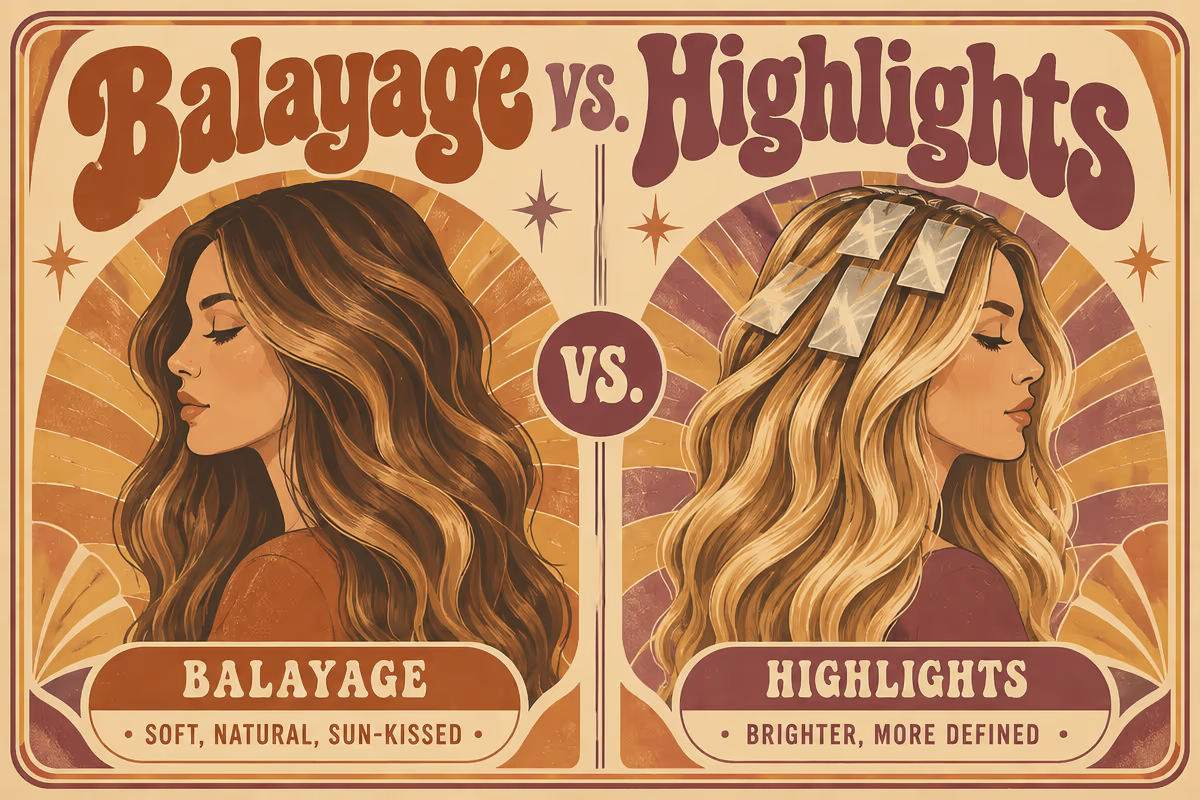
Balayage and highlights both lighten your hair — the real difference is where the lightness sits and how it grows out. Balayage is hand-painted onto the surface for a soft, sun-kissed blend, while traditional highlights are placed in foils from closer to the root for brighter, more even blonde. Neither is universally better; the right choice depends on your goal, your maintenance tolerance, and your starting color.
What Is Balayage?
Balayage comes from the French word meaning "to sweep." Instead of saturating every strand in a foil, a colorist hand-paints lightener onto sections of the hair, usually with more product toward the mid-lengths and ends and a softer transition near the root.
That approach creates a few things clients love:
- A natural, sun-kissed effect — lighter pieces that look like they came from a summer outdoors, not from a bowl.
- Softer transitions between your natural color and the lighter pieces, so there's no hard line as your hair grows.
- Dimension — because the lightener is painted selectively, you keep depth in the hair instead of lifting everything evenly.
One thing worth knowing: many balayage services still use foils or other modern tools to boost lift in strategic spots. So if you've had a "balayage" that looked different from a friend's, that's normal — the technique is a spectrum, not a single formula.
What Are Highlights?
Traditional highlights use foils to isolate sections of hair from root to end. The sections are placed closer to the root, which means the new growth line is lighter and more visible — but the overall result is brighter and more consistent.
Highlights also come in variations that change the coverage:
- Full highlights — foils placed throughout the whole head for all-over brightness.
- Partial highlights — foils focused on the top layers, crown, and face for brightness where it shows most, often with a longer stretch between appointments.
Because the lightness starts closer to the root, highlights generally create stronger, more uniform blonding than a purely hand-painted result — which is exactly what some clients want, and exactly what others are trying to avoid.
Balayage vs. Highlights: Quick Comparison
| Balayage | Highlights | |
|---|---|---|
| Application | Hand-painted on the surface, freehand | Foil-wrapped sections from near the root |
| Overall appearance | Soft, sun-kissed, dimensional | Brighter, more uniform blonde |
| Root appearance | Blends into natural color | Noticeably lighter at the root |
| Grow-out | Softer, more gradual | More visible line as hair grows |
| Maintenance frequency | Often longer between major lightening appointments | Typically more frequent touch-ups |
| Blonde potential | Moderate to bright; rooted looks | High — strongest overall lift |
| Dimension | High — keeps depth in the hair | Lower — lifts more evenly |
| Best for | Lived-in, low-effort looks | Full, bright blonde transformations |
| Appointment length | Often longer (customized placement) | Varies with full vs. partial |
| Cost considerations | May cost more up front, but stretches longer between visits | Often less per visit, but repeats more often |
What Does Balayage Look Like Compared With Highlights?
The difference is easiest to see at the root and in the grow-out:
- Balayage keeps your natural color at the base and sweeps lighter tones through the lengths — think caramel ribbons through brunette hair, or a rooted blonde that fades gradually toward the ends. It reads as "lived-in color."
- Highlights create brightness starting at or near the root, so the blonde looks more even from top to bottom. High-contrast highlights on dark hair make that root line especially obvious as it grows out.
- Dimensional color is the umbrella term for results that mix tones — a dimensional blonde might combine painted pieces, foiled sections, and a face-framing "money piece" so the hair has depth rather than one flat shade.
Face-framing brightness can be built with either technique — it's about where your colorist places the lightest pieces, not which service name is on the menu.
Is Balayage or Highlights More Expensive?
There's no single honest number, because color pricing depends on far more than the service name:
- Hair length and density
- Your starting color and any previous color treatments
- How light you want to go
- Whether corrective work is needed
- Your stylist's experience level
- Whether the appointment includes toner, gloss, or a conditioning treatment
As a general pattern, a balayage appointment can run higher up front because the placement is fully customized and the appointment is often longer. But because balayage grows out so softly, many clients stretch much longer between full lightening services — so the yearly cost can come out similar or lower. Highlights often cost less per appointment but repeat on a tighter schedule.
Ask for a price range at your consultation, including whether toner or gloss is included. Every independent stylist sets their own prices, so the honest answer comes from the person doing your hair.
Which Requires More Maintenance?
Balayage maintenance:
- The soft grow-out means fewer obvious roots, so most clients wait longer between major lightening appointments
- A toner or gloss in between keeps brassiness in check and refreshes shine
- Face-framing pieces are usually the first to lose their pop and can be touched up on their own
Highlights maintenance:
- The lighter root means new growth is more noticeable, so touch-ups typically come around more often
- Partial highlights can stretch the interval by focusing refresh on the areas that show
- Toner and gloss appointments apply here too
The exact schedule depends on the look you want. A client who loves a bright, fresh-from-the-salon blonde will book more often than one happy with a softer, rooted blend — and both can be "correct."
Which Is Better for Different Hair Types?
No hair type is off-limits for either technique — what changes is placement and approach:
- Straight hair shows grow-out lines clearly, so balayage's softness is a frequent favorite; highlights still work well when the root blend is kept soft.
- Wavy hair is the sweet spot for both — waves naturally blend painted and foiled pieces.
- Curly hair benefits hugely from hand-painted placement, because lightener can follow the curl pattern instead of a rigid weave. Many curly clients prefer balayage for exactly this reason.
- Fine hair lifts quickly, so a lighter hand (and careful strand condition) matters more than the service name.
- Thick hair gives a colorist more room to work with — dimensional combinations often look stunning here.
- Dark brunette hair can take either, but going very bright usually needs a combination of techniques across multiple sessions.
- Naturally blonde hair often needs less lifting overall — subtle painted pieces or a face frame may be all that's required.
- Gray-blending clients can pair either technique with a root shadow so the blend between the silver and the color looks intentional.
Is Balayage Better for Brunettes?
Balayage is especially popular with brunettes because it adds caramel, honey, beige, or blonde dimension while keeping the depth that makes brunette hair look rich. A soft, painted grow-out also suits darker bases, where a bright root line would be very visible.
That said, traditional highlights may be the better pick if you want noticeably brighter, more evenly distributed blonde across your whole head. Many brunettes land somewhere in the middle: painted balayage for dimension plus a few foiled sections (or a face frame) for brightness. Your colorist can build that hybrid in one appointment.
Are Highlights Better If You Want to Be Very Blonde?
Usually, yes — foiling gives a colorist more precise control over overall lift and brightness, especially for platinum or icy results. Foils hold lightener in contact with the hair from root to end, which is how the most consistent blondes are built.
But here's the nuance most articles skip: modern blonde specialists rarely pick one tool and stop there. A single appointment might combine foils, foilyage (painted sections wrapped in foil for extra lift), babylights, a money piece, and a root shadow, then finish with a toner or gloss. So the service name you request may not be the exact technique your stylist uses — and that's a good thing. The result you're after matters more than the terminology.
Balayage vs. Highlights: Which Is Right for You?
A quick way to decide:
Choose balayage if you want:
- Softer, more gradual grow-out
- Natural-looking dimension with depth
- A lived-in blonde or caramel look
- Less obvious root line between appointments
- Longer stretches between major lightening appointments
Choose highlights if you want:
- More brightness from the root
- More uniform blonde coverage
- A stronger overall blonde transformation
- Precise control over exactly where the hair is lightened
And if you're torn, that's normal — a consultation with a color specialist is the fastest way to land on the right technique. Bring photos of the result you want (not just the process), and a good colorist will tell you which approach gets you there and how many sessions it will take.
Finding a Balayage or Blonde Specialist in Tyler, TX
BB Beauty Suites in Downtown Tyler isn't one traditional salon with a single service menu — it's a suite community of independent beauty professionals, each with their own specialties, prices, and booking. Several of those independent stylists specialize in balayage, blonding, highlights, and dimensional color, including:
- Marissa Self — a hair stylist and makeup artist who lists balayage, blonding, and dimensional color among her specialties, along with extensions and event styling.
- Kristy Hamilton — a hair stylist specializing in highlights, low lights, balayage, and vivid color.
- LaEsha — a curly and multi-textured hair stylist who offers balayage, creative color, and silk press services.
- Stacy Box — a hair stylist working in textured cuts, blonding, and color.
Other independent professionals at BB Suites offer complementary color work such as lived-in color, low-maintenance color, and gray blending — you can see everyone's specialties in the provider directory and book directly with the stylist you choose.
How to Choose the Right Colorist
Technique matters, but the stylist behind it matters more. Before you book, ask:
- Do you specialize in blonding or dimensional color?
- Can I see examples of clients who started close to my color?
- How often will I need maintenance to keep this look?
- What will my first appointment involve, and how long will it take?
- Will getting to my goal color take more than one session?
- What should I do at home to protect the color?
A stylist whose portfolio already shows the result you want — on hair like yours — is a safer bet than a menu of technique names.
FAQ
What is the main difference between balayage and highlights?
Balayage is a hand-painted technique that creates soft, sun-kissed pieces with a blended root, while highlights use foils to lift sections from closer to the root for brighter, more uniform blonde. The biggest practical differences are the root line and how the color grows out.
Is balayage better than highlights?
Neither is objectively better. Balayage makes more sense for soft dimension and lower maintenance; highlights make more sense when you want maximum brightness from the root or a fully even blonde. The right choice depends on your goal, starting color, and how often you want to return.
Is balayage more expensive than highlights?
Balayage often costs more per appointment because the placement is fully customized and the service takes longer. However, because it grows out softly, many clients need fewer full lightening services per year, which can balance the overall cost. Pricing varies by hair length, density, starting color, and stylist.
Does balayage damage your hair less than highlights?
Not necessarily. Damage depends on how much lightening your hair needs, its condition, the products and technique used, and how the lightener is processed — not the name of the service. Balayage can use less lightener overall, but the honest answer comes from a stylist assessing your hair in person.
How long does balayage last?
A balayage typically looks intentional for several months because the root blends into your natural color. Most clients refresh their tone with a gloss or toner in between and return for a full service somewhere in the range of a few times a year, depending on the look.
How often do highlights need to be touched up?
Because highlights lift close to the root, new growth shows sooner — most clients touch up roughly every 6–10 weeks, and partial highlights can sometimes stretch that interval. Your stylist can give you a realistic schedule for your specific color and root contrast.
Can brunettes get balayage?
Yes — brunette hair is one of the most popular balayage bases. Painted caramel, honey, or beige pieces add dimension while keeping the depth that makes brunette hair look rich. Brunettes who want very bright, even blonde may still be better served by foiled highlights or a combination.
Can you get balayage on short hair?
Yes, though placement is more limited in a short cut. A pixie or short bob can still take painted pieces or a face frame, and balayage grows out gracefully as the cut grows. Very short hair often suits a subtle money piece or face-framing pieces best.
Is balayage good for curly hair?
Balayage is a favorite for curly clients because the colorist can paint lightener along the curl pattern instead of following a rigid weave. The result follows the shape of your curls and grows out softly — many curly and multi-textured stylists list balayage as a core service for this reason.
Can balayage make you very blonde?
Yes, but very bright, evenly blonde results usually require combining balayage with foiled sections or foilyage, and sometimes more than one session depending on your starting color. Tell your stylist your target shade up front so they can plan the sessions.
What is dimensional hair color?
Dimensional color means your hair carries more than one tone — a base depth plus lighter pieces, rather than a single flat shade. It can be built with balayage, highlights, babylights, money pieces, root shadows, and toners, often combined in one appointment.
Should I book balayage or highlights if I'm not sure?
Book a consultation instead of committing to a service name. Describe the result you want — or bring photos — and let a color specialist recommend the technique, the number of sessions, and a maintenance schedule. The result you want matters more than the terminology you request.
Find a Hair Color Specialist in Tyler
If you're weighing balayage against highlights in Tyler, Texas, the best next step is a conversation with a stylist who does this work every day. Explore the independent hair stylists at BB Suites in Downtown Tyler, browse their portfolios and specialties, and book directly with the one whose work matches the look you want — every appointment is scheduled with each independent professional on their own terms.